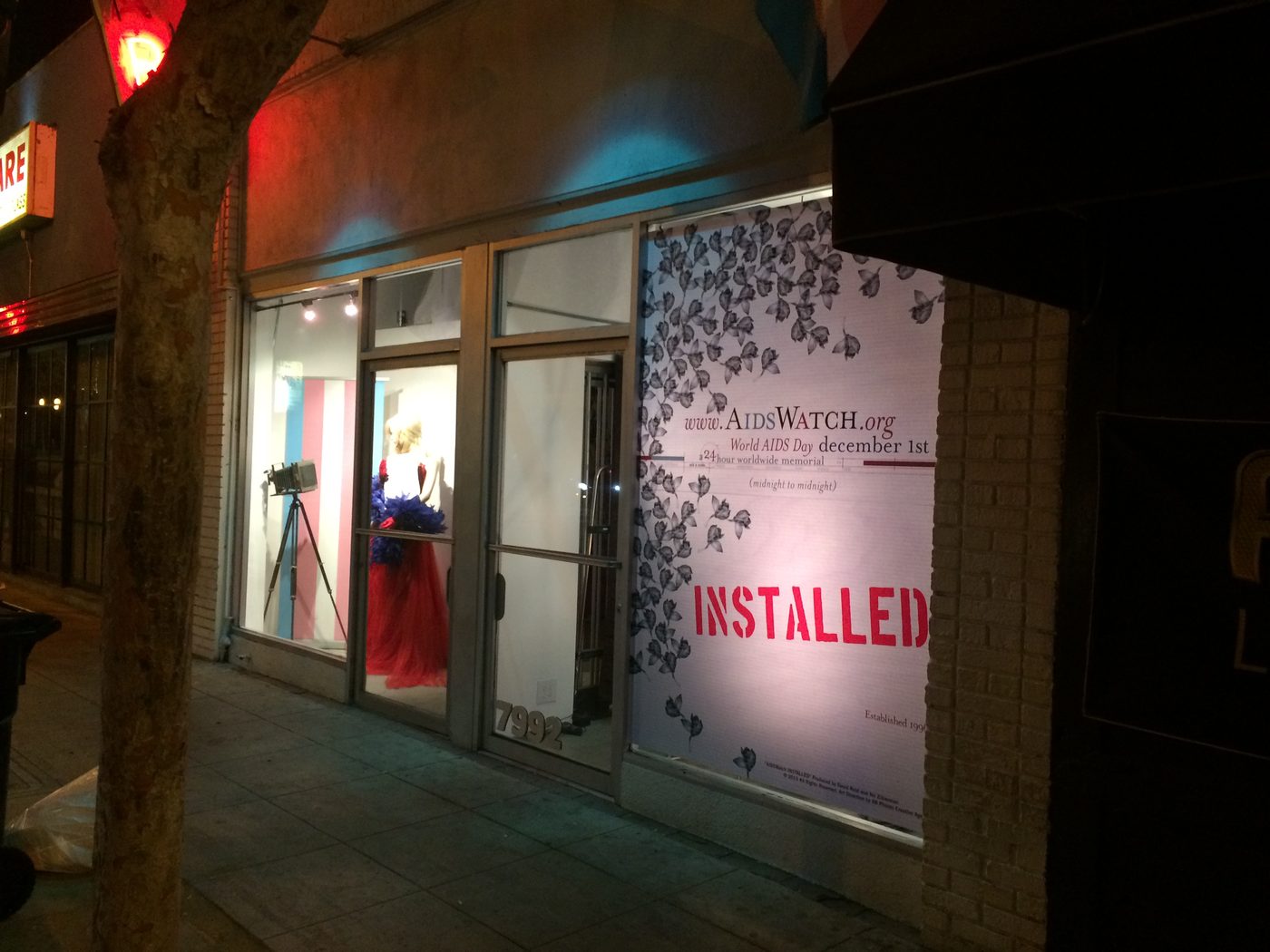
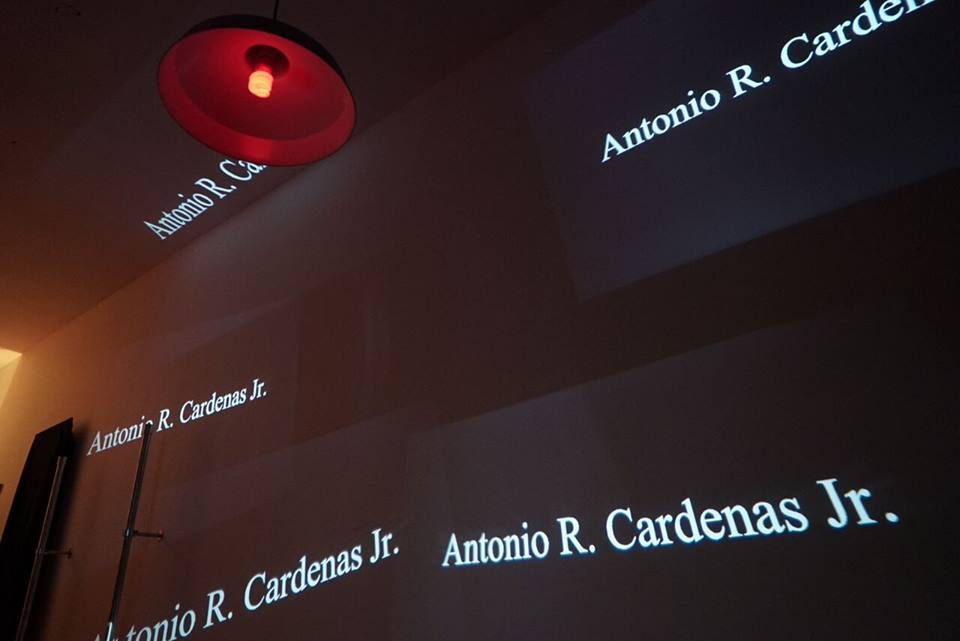
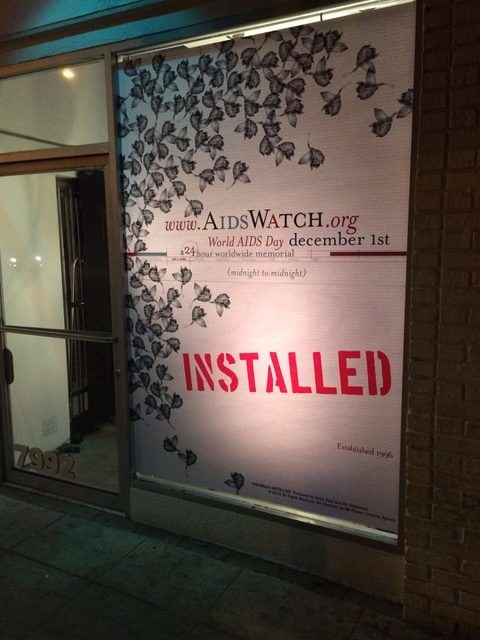
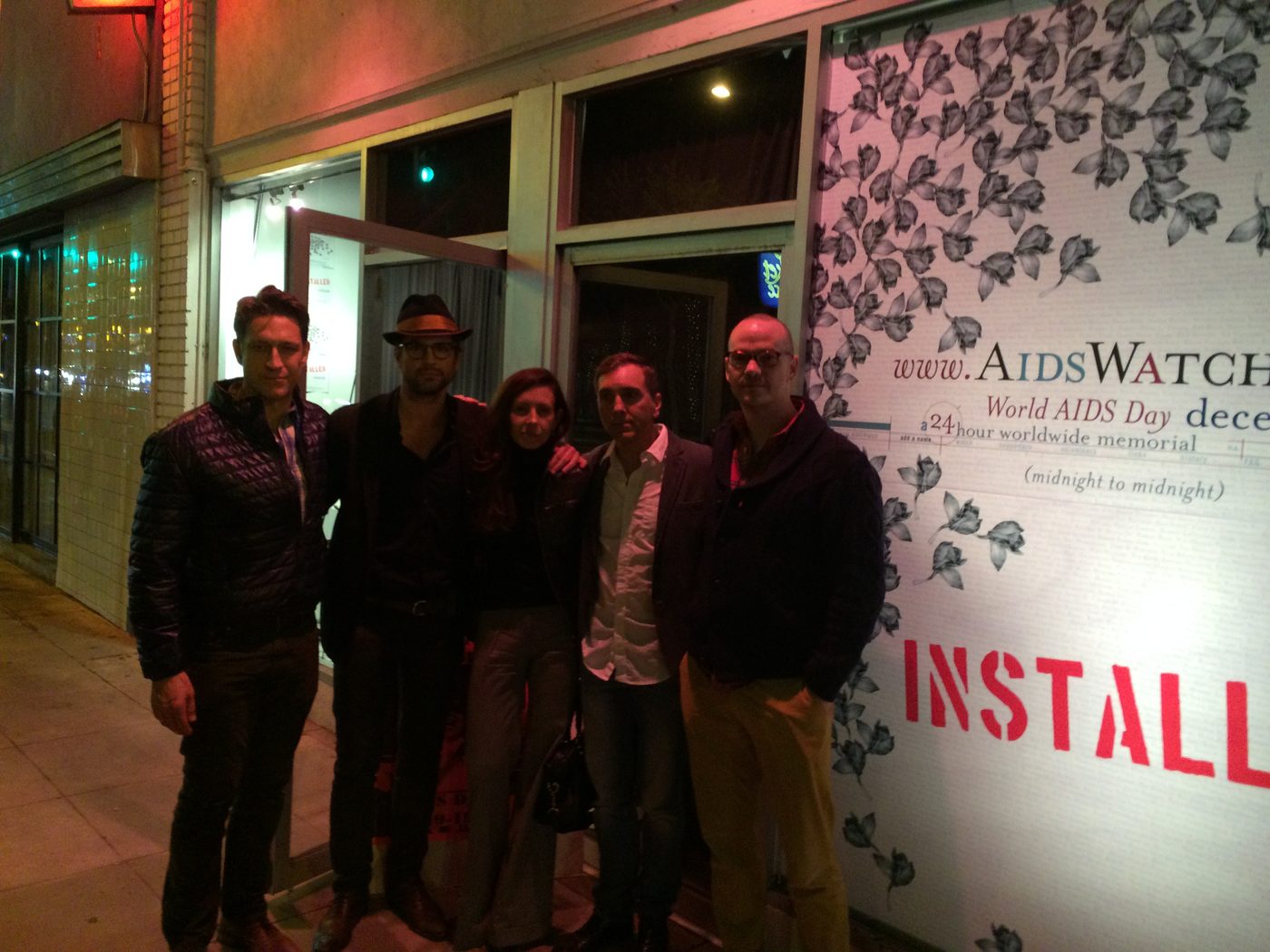
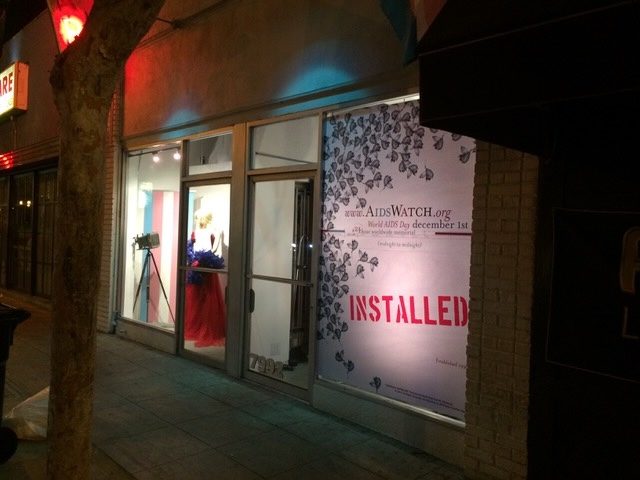
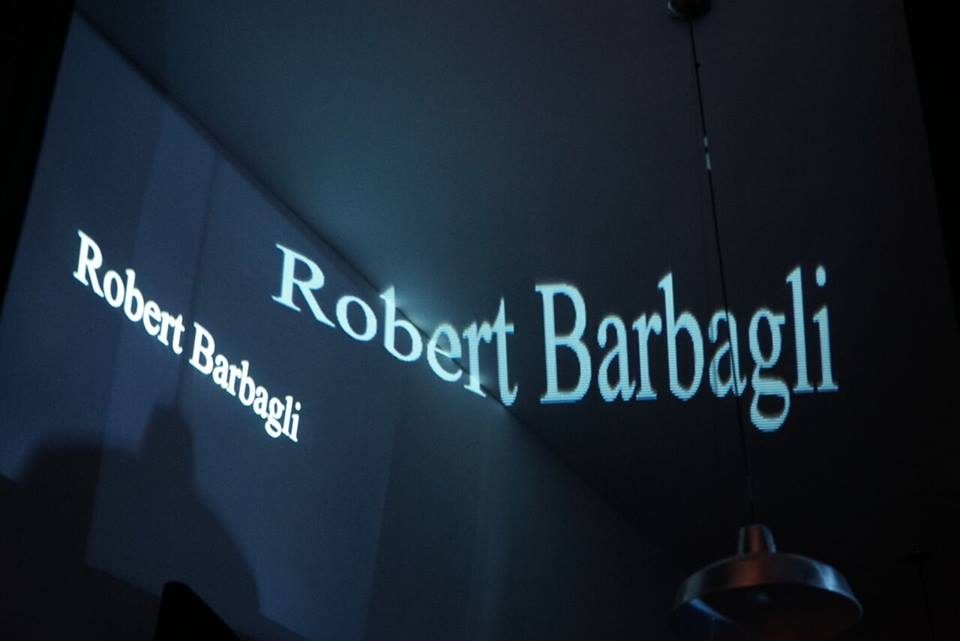
During the last week of November 2015, ahead of World AIDS Day, AIDSWatch took over a double vacant storefront at 7992 Santa Monica Boulevard, West Hollywood, California. The build took a full week: twelve projectors — cheap ones, under $30 each, simply projecting whatever page was open on a laptop — plus nine monitors and three large-format TVs that people brought in themselves. Picture quality was rough, but the lettering read clean. Visitors also logged their own phones and laptops onto the venue’s wifi to watch.
The storefront wasn’t the original plan. David had hoped to use Fiesta Hall — a city-owned hall built by the WPA in the 1930s — using its stage and the black curtains already there to create the same kind of large, dark space for the names. There were snags: a use fee of around $750 that David had hoped the city would waive, and the Council wasn’t able to make it work, or didn’t want to — and with less than a month until the date, it wasn’t going to happen in time.
David described the situation at a City Council meeting. Nir Zilberman — then a local activist — was in the room, heard him, and offered his own lease instead: the storefront on Santa Monica Boulevard, right next door to Laurel Hardware, which kept a steady stream of people passing by all weekend.
At midnight on November 29th, the moment November 30th began, the names started. They ran continuously from that night through sunrise on Monday, December 4th.
One section of the space became an informal supply point — food and water for anyone who needed it. Some of the neighborhood’s unhoused residents spent the night there, watching the names alongside everyone else who came through.
On December 1st, the cast of the American Queer as Folk held a small reunion inside the space for about an hour.
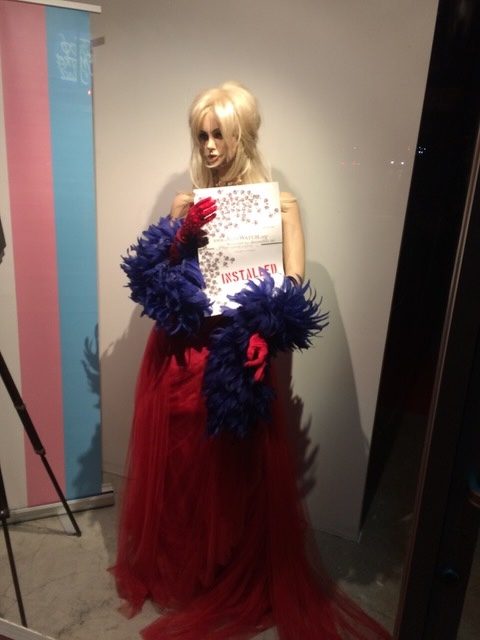
The mannequin in the window — wig, red gown, blue feather boas — became its own small moment, showing up across social media, tagged again and again that week.